Graham Platner suspended his campaign on Wednesday, July 9, saying in a social media video that “for the movement to continue, it can’t be me.” The announcement followed weeks of reporting that, according to The New York Times and Politico, detailed multiple conduct allegations and controversies that increasingly isolated the Maine Senate hopeful.
Graham Platner: campaign collapse and Mamdani response
What happened
Platner’s campaign drew national attention as a progressive insurgent bid but unraveled after reporting by major outlets. The New York Times published a June report that included accounts from former partners describing troubling behavior; that piece also raised questions about a controversial chest tattoo, which some reporters identified as a Totenkopf symbol. The Times report presented those accounts as the paper’s reporting, and Platner has responded publicly to deny some of the characterizations detailed there.
On July 6, Politico reported an allegation by Jenny Racicot that, according to Politico’s reporting, Platner raped her in 2021. Politico attributed the claim to Racicot; Platner denied the allegation. After the Politico piece, several prominent supporters moved to distance themselves from Platner’s campaign, and pressure mounted for him to step aside.
Platner posted a video statement on Wednesday saying he would suspend his campaign so that “the movement” could continue without him. The suspension is the latest development in a rapid sequence of reporting, defections and public scrutiny that reshaped the race in recent weeks.
Mamdani response and the NY1 interview
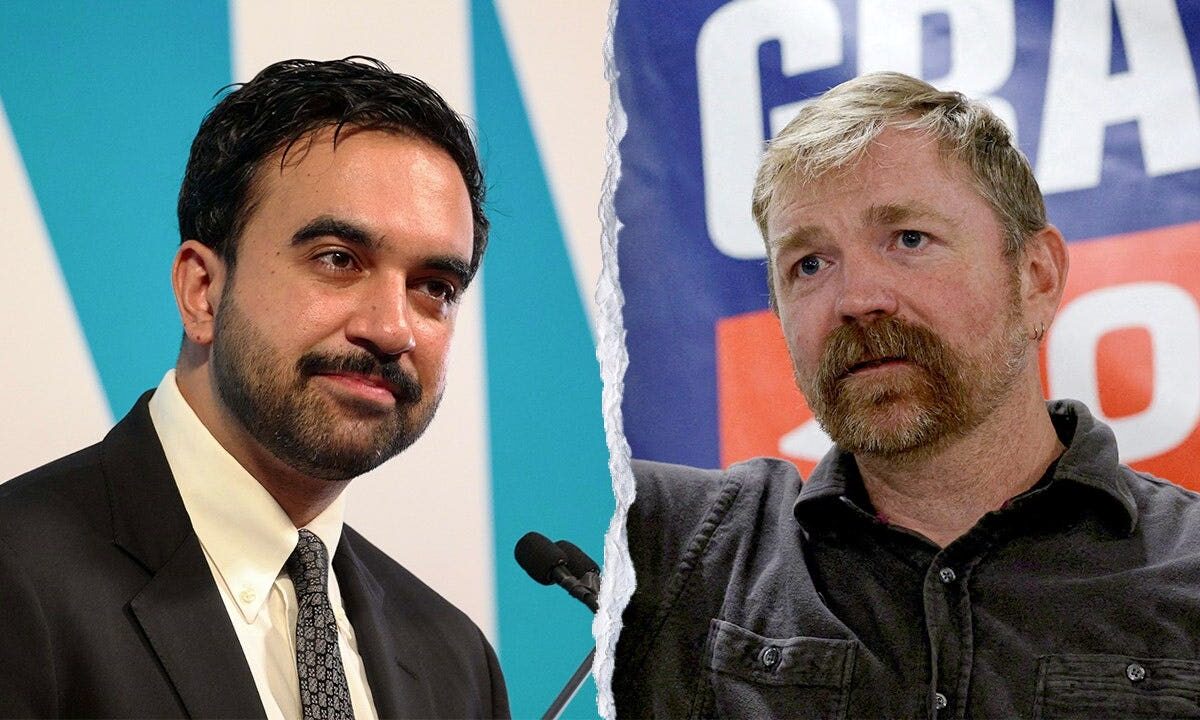
In an interview with NY1’s Errol Lewis, New York City Mayor Zohran Mamdani was asked whether the Platner episode suggests a broader problem in progressive politics. Mamdani emphasized immediate closure: “I think my focus right now is how do we ensure that we bring this chapter to a close and then start to write a new chapter,” he told NY1, adding that he trusts Maine voters to “point us in the right direction.” Those comments were reported by Fox News and NY1.
Mamdani also said publicly this week that it was “time for him to drop out of the race,” referring to Platner, and he indicated he would not be broadly expanding his endorsement activity outside New York City. He noted that his past, local endorsements have won races here and framed his remarks around moving forward responsibly rather than immediately generalizing about the movement as a whole.
Political fallout among Democrats
The Politico report and other coverage led several Democrats who had defended Platner to step back. National figures named in reporting — including Sen. Bernie Sanders, Rep. Ro Khanna and Sen. Ruben Gallego — publicly withdrew their defenses after the new allegations surfaced, according to news accounts. Those shifts illustrated how quickly political support can evaporate when fresh, serious allegations emerge in high-profile contests.
Morris Katz, an early associate who helped launch Platner’s campaign before joining Mamdani’s team, became a focal link between the campaigns. Reporting tied Katz to both networks of activists and fundraisers, highlighting how interwoven some endorsement and staffing decisions are among progressive campaigns. Katz’s role underscored the reputational risks that can ripple across allied efforts when a candidate faces intense scrutiny.
Implications for the progressive movement
Observers told reporters the episode raises questions about vetting, endorsement strategy and the balance between insurgent politics and established party practices. Some supporters of prior endorsements pointed to local wins as evidence that targeted, localized backing can succeed; critics argued that higher-profile races require more exhaustive reviews before public elevation.
Mamdani, in the NY1 interview, declined to say that the Platner case represented a systemic failure across progressive organizations. He framed his response around accountability in the moment and the need to move forward carefully. National discussion in the wake of Platner’s suspension will likely focus on whether parties and allied groups change vetting processes or adjust how quickly they signal support in competitive races.
Timeline and what to watch next
Key reporting milestones in recent weeks include the June New York Times story with multiple accounts from former partners, the July 6 Politico article publishing Racicot’s allegation, the withdrawal or softening of public defenses by several national Democrats, and Platner’s suspension on Wednesday, July 9.
What to watch next: whether Maine’s race prompts party organs or outside groups to reexamine endorsement procedures; whether additional reporting emerges that clarifies or contradicts earlier accounts; and how Maine voters and local political actors respond as the field reshapes. Any further statements from Platner, the accusers as reported by outlets, or from endorsers will likely shape the next phase of coverage.
Source attribution: This report is based on reporting by Fox News (which first published Mamdani’s remarks and covered local reaction), the NY1 interview with Errol Lewis, The New York Times’ June reporting on Platner, and Politico’s July report on an alleged sexual assault. Original reporting cited: Fox News; NY1; The New York Times; and Politico.
Note: Allegations are described here as reported by the cited news organizations; Platner has denied the sexual-assault allegation reported by Politico and has publicly disputed some characterizations detailed in The New York Times reporting.