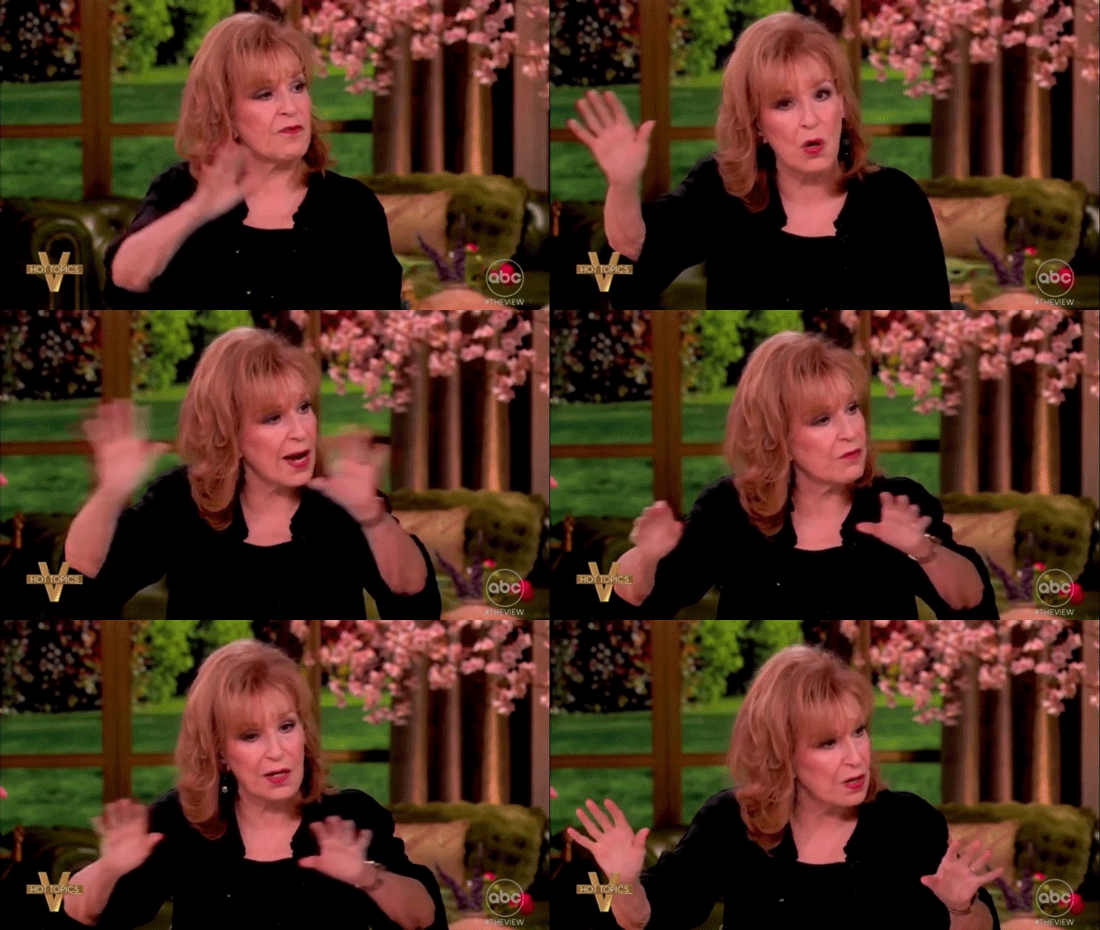
Joy Behar told her The View co-hosts they were “not living in reality” as she dismissed Kamala Harris as the best Democratic choice for 2028, saying Harris “didn’t win one time” and offering Jon Ossoff, Josh Shapiro, Gavin Newsom and JB Pritzker instead.
The exchange grew tense as co-hosts pushed back over whether voters would reject a candidate because of identity and whether electability should override symbolic nominations. The panel’s back-and-forth, broadcast to a national audience, highlights the kind of media conversations that can shape early primary narratives.
What Joy Behar said on The View
Behar interrupted a discussion of potential 2028 nominees to say she had “a better list” than the names under initial consideration. She explicitly questioned returning to Kamala Harris, saying, “I love her, she was great, but she didn’t win one time. What makes you think she’s going to win again?”
Cohosts responded with a range of views: some echoed caution about voter reactions in swing areas, while others argued against pre-emptively excluding candidates because of identity or assumed vulnerabilities.
Behar’s preferred 2028 Democratic picks
On air, Behar named four Democrats she preferred as more viable 2028 options: Jon Ossoff, Josh Shapiro, Gavin Newsom and JB Pritzker.
She pointed to a mix of perceived electability traits — executive experience and familiarity with governing — and youth in the case of Ossoff, noting those factors in the on-air discussion rather than citing detailed polling or campaign research.
“I have a better list. I love her, she was great, but she didn’t win one time. What makes you think she’s going to win again?”
— Joy Behar, on The View
Cohost debate on identity and electability
The segment shifted into a dispute over identity politics and how much that should factor into nominee selection. Behar and some others raised concerns about how identity might play in certain regions of the country.
Other co-hosts pushed back, saying successful campaigns connect with voters across demographics and that Democrats should not write off contenders purely on identity grounds. The disagreement touched on broader party tensions: symbolic representation versus pragmatic calculations about winning swing voters.
Sunny Hostin and others referenced historical shifts in voter coalitions and warned against assuming uniform public responses, while panelists like Sara Haines emphasized that campaigns can change perceptions through messaging and retail campaigning.
Background: Harris in 2024 and the result
The on-air discussion referenced recent history reported in media coverage: Fox News noted that in 2024 President Joe Biden stepped aside amid questions about his fitness to continue, and that Kamala Harris then became the Democratic nominee. Fox’s coverage reported that Harris lost to Donald Trump that year and that she fell short in key battleground states.
Those points were presented during the broadcast as part of panel commentary and analysis of recent events rather than as newly sourced investigative reporting. The program’s contributors used the reported 2024 outcome as context for debating whether Democrats should consider different options for 2028.
As presented on air, the 2024 result was invoked to raise questions about what lessons the party should draw about voter preferences, messaging, and the selection of future nominees.
What this means for 2028 primaries
The immediate effect of a televised rebuke from a prominent commentator is usually limited but not negligible. Public dismissals by well-known voices can influence media storylines, prompt new polling, and affect donor conversations, especially early in the cycle.
If Behar’s list or similar moderate-executive narratives take hold in coverage, it could prod party operatives and potential candidates to emphasize electability in messaging and fundraising pitches. That may encourage figures with recent executive experience to explore national bids or to test fundraising and poll numbers.
Conversely, pushing identity and representation questions to the fore may mobilize parts of the party that prioritize symbolic and demographic alignment, setting up a primary debate between coalition-building versus broader general-election appeal.
Ultimately, primary dynamics will respond to concrete data: early-state polls, donor flows, and primary calendar incentives. Media conversations like this one help frame those early tests but do not determine them alone.
FAQ
Did Joy Behar say Kamala Harris can’t win in 2028?
Behar said on air that Harris “didn’t win one time” and questioned her prospects, framing that as a reason to consider other 2028 choices. The remark was delivered as commentary during a panel discussion.
Who did Behar name as preferred 2028 Democrats?
Behar mentioned Jon Ossoff, Josh Shapiro, Gavin Newsom and JB Pritzker during the segment but did not present new polling data to support those names.
What did cohosts say about identity and electability?
Cohosts split on the issue: some argued voters’ reactions to identity factors remain politically relevant, while others said candidates win by proving themselves on the campaign trail, not by being pre-judged on identity.
Source attribution
This article is based on Fox News coverage of the July broadcast and the on-air discussion on The View. Quoted lines and the panel’s judgments are presented as broadcast commentary. Original coverage: Fox News — Joy Behar rejects Kamala Harris for 2028.
Note: Quotations and viewpoints in this story reflect remarks made by The View co-hosts and are reported as commentary from the broadcast.