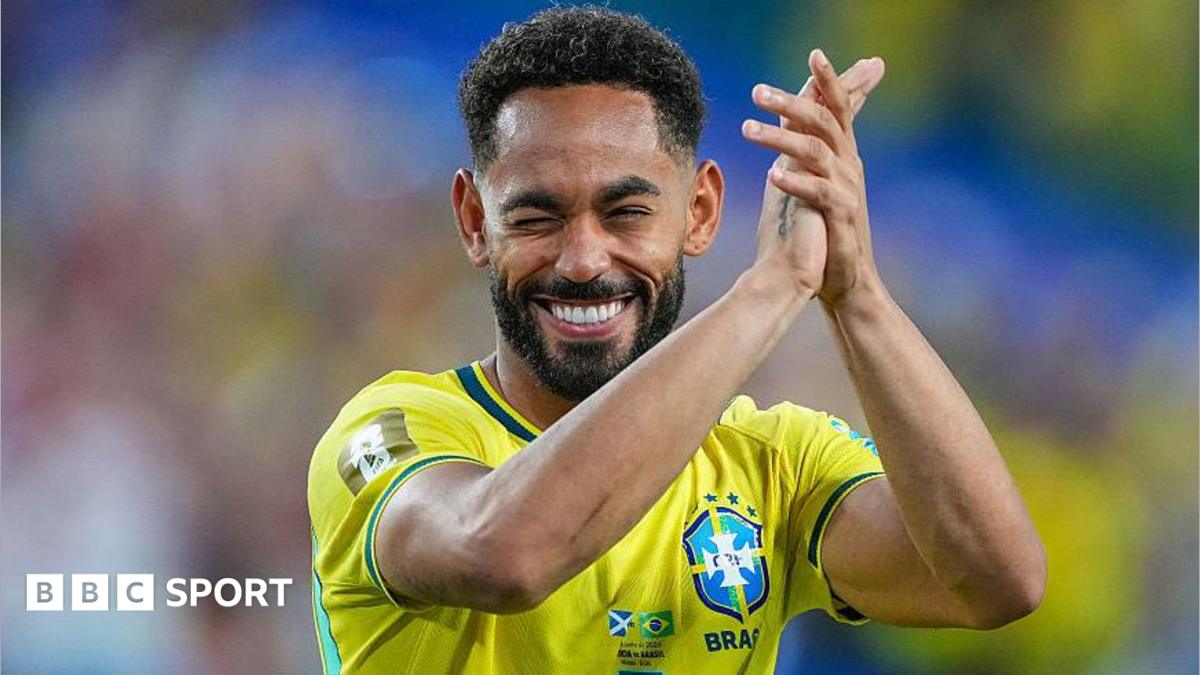
The BBC Sport report published on 2026-06-29 identifies Matheus Cunha as a central figure in Brazil’s evolving setup. BBC Sport frames Cunha — a Manchester United striker — as a player whose movement, versatility and pressing profile make him particularly useful to a national side described in the piece as adopting a more adaptable system reportedly overseen by Carlo Ancelotti.
The article quotes former Brazil midfielder Lucas Leiva and uses tactical evidence to explain why Cunha is being emphasised. Below we unpack BBC Sport’s analysis: the tactical rationale, how Cunha’s club role at Manchester United maps to Brazil, the technical context offered by Lucas Leiva (as reported by the BBC) and what to watch next for verification.
Why Matheus Cunha fits Brazil’s adaptable system
BBC Sport’s core argument is that an adaptable system needs forwards who can alter their positioning without substitutions, providing both vertical threat and link-play options. The BBC analysis highlights Cunha’s tendency to drift into half-spaces, drop to connect midfield and create overloads — traits it argues are central to the system outline attributed to Carlo Ancelotti in the report.
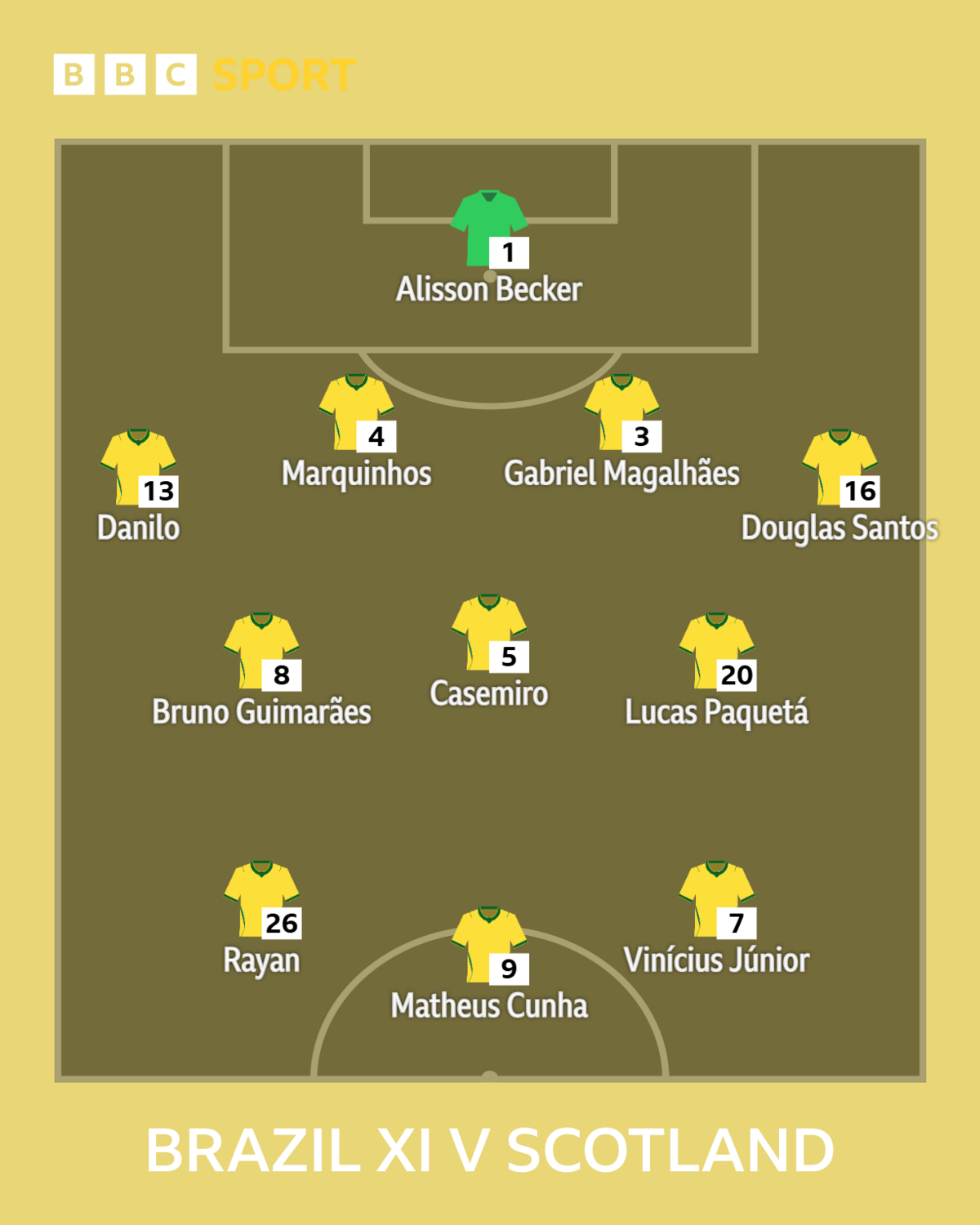
According to BBC Sport, Cunha’s value is less about fixed position and more about functional variety: he can start as a nominal centre-forward, move to the wings to stretch defences, or drop between lines to facilitate combinations with attacking midfielders. The BBC links those behaviours to in-game tactical toggles — switching between a more direct centre-forward approach and a false-nine model without changing personnel.
The BBC piece also points to Cunha’s pressing and transition play. As the report describes it, Cunha’s ability to press from different angles and recover possession in advanced areas makes him useful to a team that wants to regain the ball high and launch quick transitions — a feature the BBC frames as deliberate within the adaptable brief attributed to Ancelotti.
How Cunha’s role at Manchester United maps to the national team
BBC Sport lists Cunha as a Manchester United striker and uses his club minutes as a template for possible national duties. The BBC notes that, at Manchester United, Cunha has been deployed in multiple frontline roles — nominal centre-forward, wide attacker and deeper link player — depending on game plans and opposition. That club usage provides a practical demonstration of the positional flexibility Brazil may seek.
The BBC analysis argues that Cunha’s Premier League exposure gives him repeated experience of high-intensity pressing sequences and quick transitional phases. Those club situations, the BBC suggests, make him a credible option for a national attack that wants a striker capable both of finishing chances and of participating in the build-up and defensive triggers required by a fluid system.
Crucially, BBC Sport frames these club-to-country links as evidence rather than definitive instruction: Cunha’s Manchester United roles are shown as a working template that Brazil coaches can adopt or modify depending on match plans and personnel available.
Lucas Leiva’s perspective and technical context
BBC Sport quotes Lucas Leiva, the former Brazil midfielder, to add technical context. As reported, Leiva highlights Cunha’s spatial intelligence — his timing of runs into channels and his understanding of half-space dynamics — as a reason coaches might prioritise him in a fluid front line.
Leiva, according to the BBC, also emphasises the defensive side of forward play. He argues that in a system where forwards initiate press triggers, Cunha’s willingness to close down wide passing lanes and to press in coordinated patterns is valuable for regaining possession high and creating immediate chances from turnovers.
BBC Sport uses Leiva’s observations to link individual traits to system-level outcomes: Cunha’s movement can change how midfielders position themselves and how the team shifts between compact and expansive shapes during matches.
What comes next for Brazil and Cunha
BBC Sport sets out the immediate verification points: squad selection, starting positions and match minutes will indicate whether Cunha is being used as the adaptable fulcrum the article describes. If Cunha is repeatedly named in different attacking roles or is substituted to change shape, that will support the BBC’s analysis.
The BBC piece also notes that official statements from coaches or the Brazilian federation will be necessary to clarify the exact responsibilities attributed to Carlo Ancelotti in any formal sense. Until such confirmation, descriptions of Ancelotti’s role should be read as the BBC’s framing of the tactical picture rather than as federation-confirmed fact.
For those tracking the implementation, BBC Sport recommends watching positional heat maps, substitution patterns and the timing of Cunha’s runs relative to midfield rotations. Those match-level details — which the BBC highlights — will show whether Brazil’s approach is operationally adaptive or primarily conceptual at this stage.
Source: BBC Sport — “How the new Brazil is taking shape and why Cunha is key” (published 2026-06-29). https://www.bbc.co.uk/sport/football/articles/clywddlrykdo?at_medium=RSS&at_campaign=rss